
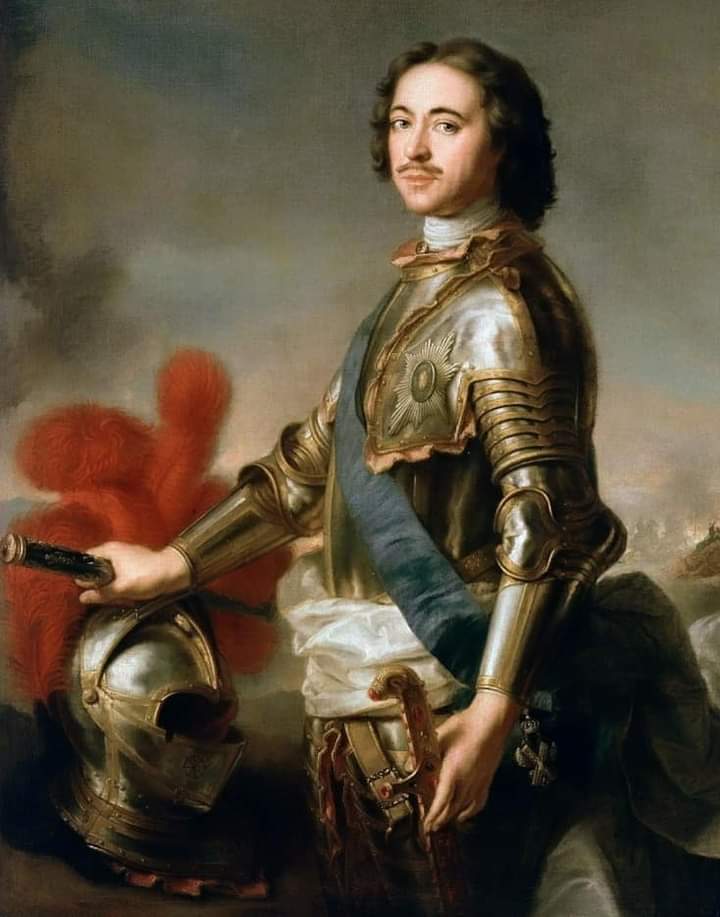
Death of Peter The Great
Peter the Great began as the Tsar of Russia and eventually became the Emperor.
He was the grandson of Tsar Michael Romanov and became Tsar when he was only ten years old.
His early life was incredibly privileged and he was educated by several notable intellectuals.
In adulthood, Peter I was known for being very tall.
Some historians believe he may have also suffered from a form of epilepsy.
Peter the Great was a very controversial figure who managed to expand Russia, westernize its culture, and establish it as a major European power.
Under Tsar Peter’s rule, Russia became an empire.
Peter decided to move the capital of Russia from Moscow to St. Petersburg.
This was a massive project that required a city to be built on the Gulf of Finland.
It took nearly a decade to complete and tens of thousands of people died during its production.
St Petersburg remained the capital of Russia, until the communist revolution in the year 1918.
By his two wives, he had fifteen children.
Three children by Eudoxia Lopukhina, and
twelve by Catherine I.
These included four sons named Pavel and three sons named Peter, all of whom died in infancy.
Only three of his children survived to adulthood.
He also had three grandchildren: Tsar Peter II, Grand Duchess Natalia, and Tsar Peter III.
In his old age, Peter began to suffer from bladder and urinary tract problems.
Doctors performed surgery and relieved around four pounds of urine from his bladder.
Though he recovered for a time, the problems returned worse than before.
He died on 8th February 1725 without naming an heir.
An autopsy revealed that his bladder had been infected with gangrene.
Peter was interred in the Saint Peter and Paul Cathedral, Saint Petersburg, Russia
About The Author


