
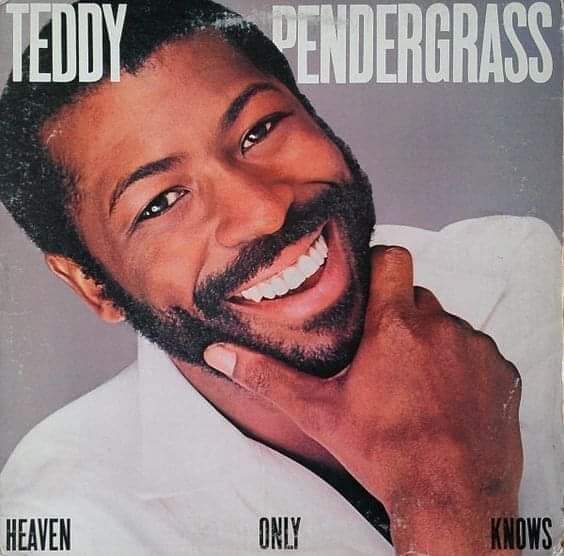
Born March 26,1950, Theodore “Teddy” Pendergrass began singing gospel music in Philadelphia Teddy’s Biography churches. He became an ordained minister at the age of ten. When he was only 6 years old, Teddy was invited to sing in the highly prestigious citywide McIntyre Elementary School Choir and in the All-City Stetson Junior High School Choir. A self-taught drummer, Pendergrass had a teen pop vocal group by age 15.
Pendergrass’ musical career really took off after he became the drummer for The Cadillacs, a local singing group. In the late ’60s, The Cadillacs merged with the more-established group, Harold Melvin and the Blue Notes. In 1970, the “Blue Notes” broke up and Harold Melvin, now aware of Pendergrass’ vocal prowess, asked Teddy to take the lead singer position. Once Pendergrass’ distinct vocals were heard by the dynamic production team of Kenneth Gamble and Leon Huff, they eagerly signed the group to Philadelphia International Records. A new era of music had begun.
Beginning with “I Miss You” a steady stream of hit singles flowed from the collaboration of Gamble & Huff and Pendergrass: “If You Don’t Know Me By Now,” “The Love I Lost,” “Bad Luck,” “Wake Up Everybody” (number one R&B for two weeks in 1975). Pendergrass also recorded two major gold albums; “To Be True” and “Wake Up Everybody”.
With Teddy’s lead vocals spurring the group to more success, the billing of the group was revised to Harold Melvin and the Blue Notes featuring Theodore Pendergrass.
In 1976, Pendergrass left Harold Melvin’s Blue Notes and formed his own Blue Notes, featuring Teddy Pendergrass. Teddy eventually disbanded his Blue Notes in favor of a solo career and went on to sign a contract with Philadelphia International Records.
With the launch of his solo career, Teddy burst on the scene with his platinum solo debut album Teddy Pendergrass that included the top-notch singles: “I Don’t Love You Anymore,” “You Can’t Hide From Yourself,” and “The More I Get the More I Want.”
Inspired by the great Shep Gordon, Teddy began to institute his infamous “Ladies Only” concerts. His next three albums, Life Is a Song Worth Singing (1978), Teddy (1979), and Teddy Live (Coast to Coast) went on to become gold or platinum.
Teddy received several Grammy nominations during 1977 and 1978 including Billboard’s 1977 Pop Album New Artist Award, an American Music Award for best R&B performer of 1978, and awards from Ebony magazine and the NAACP. Teddy was also the number one choice in consideration for the lead in the movie biopic The Otis Redding Story. The ’70s ended, but Teddy kept racking up the hits.
Teddy’s album “Teddy” produced the hits “Turn Off the Lights,” and “Come Go With Me,” in 1979. His hits “Shout and Scream,” and “It’s You I Love,” were on his album Live Coast to Coast also in 1979. And in 1980 his album “TP” produced the hit “Love TKO”. His 1981 album “It’s Time for Love” gave Teddy another gold album and included the hit singles “My Latest, My Greatest Inspiration” and “I Can’t Live Without Your Love.”
In 1982, a devastating car accident left Teddy paralyzed from the waist down and wheelchair bound. After nearly a year of physical therapy and counseling, Teddy triumphantly returned to the recording scene. In 1983 he signed a contract with Elektra/Asylum in 1983. With tenacity and a determined spirit, Teddy submerged himself back into the music. Philadelphia International Records later issued two albums of unreleased tracks, “This One’s for You” (1982) and “Heaven Only Knows” (1983). Teddy’s ninth solo album, the Elektra/Asylum debut, “Love Language” went gold in the spring of 1984. Other albums included “Workin’ It Back” (1985), “Joy” (1988), whose title track peaked at number one RB for two weeks, and “Little More Magic” (1993). The latter half of the ’90s found Teddy recording for the Surefire/Wind Up label. “Truly Blessed” (the name of a 1991 Elektra album) is the title of the telling autobiography Teddy Pendergrass co-authored with Patricia Romanowski.
In May 2001, after a 19-year absence, Teddy made a remarkable return to the concert stage, performing two sold out shows at the Trump Taj Mahal Hotel and Casino in Atlantic City, NJ. The shows were met with standing ovations and national recognition. Since then, Teddy has played too sold out concerts across the country including a performance at the Wiltern Theater in Los Angeles on Valentine’s Day 2002 for a DVD/ CD and VHS release entitled, “From Teddy with Love.”
In 2002, Mayor John F. Street of Philadelphia declared October 12th “Teddy Pendergrass Day” to commemorate the first live performance given by Teddy in over two decades.
Prior to his death, Teddy become an outspoken advocate for the disabled founding a national nonprofit organization that helps people with spinal cord injury (SCI) rebuild their lives.
On June 5, 2009, Teddy underwent successful surgery for colon cancer. He returned home on June 15th only to return to the hospital one day later with respiratory issues. On January 13, 2010, seven months later, at age 59, he died of respiratory failure with his beloved wife Joan by his side. His body is interred at the West Laurel Hill Cemetery in Bala Cynwyd, Pennsylvania. He was survived by his wife Joan, his mother Ida and his children, Tisha, LaDonna and Teddy II.
About The Author


