
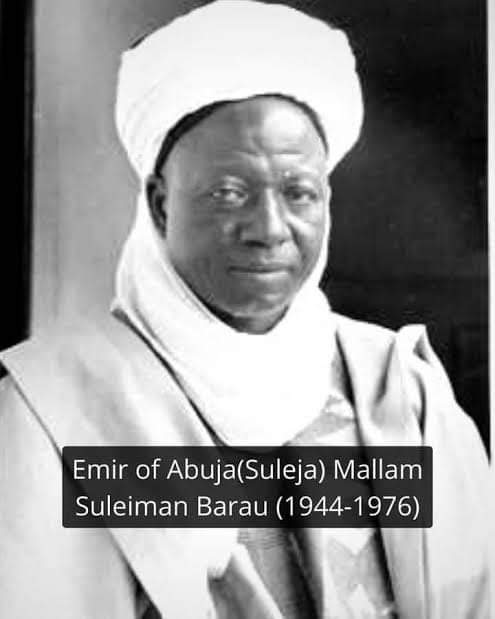
Suleimanu Barau (1903 – 1979) served as the 6th emir of Abuja, a title associated with the emirate controlled by the Hausas who had fled Zazzau during the Fulani Jihad. Born to Mohammed Gani, he attended Bida Provincial School before pursuing further studies at Katsina Training College, specializing in education and teaching.
Upon completing his secondary education, Barau received his teaching certificate after five years at Katsina College. Initially a teacher in Keffi and Bida from 1927 to 1931, he transitioned to the role of district head of Diko in 1931. Later, he joined the Abuja Native Administration to support Emir Musa, who was aging.
In 1944, Barau became the emir of Abuja, marking a historic moment as the first emir in Nigeria with a Western education. As the emirate’s ruler, he modernized customs, replacing certain old traditions of the Habe’s. Notably, he abolished the practice of subjects kneeling and pouring dust on their heads in obeisance. Additionally, Barau initiated the documentation of remaining Abuja traditions.
His educational background led to increased responsibilities, and he became one of the select emirs appointed to the Northern Provinces Board of Education. Barau also served as a member of the legislative council of Nigeria, further contributing to his influential role in both education and governance.
About The Author


