If you’ve ever searched for a finance app, you already know how overwhelming it can be. Budgeting apps, investment apps, bill payment apps, credit apps — all claiming to “optimize” your money.
For someone new to AI in personal finance, the real challenge isn’t using an app. It’s choosing the right one in the first place.
The truth is, there’s no single “best” AI financial app for everyone. The right choice depends on how you live, how you earn, and what you actually need help with. A city professional with rent and subscriptions has very different needs from a freelancer with irregular income or someone just starting to budget.
Let’s break this down in a simple, practical way.
First, Be Clear About What You Want Help With
Before downloading anything, ask yourself one basic question: What problem am I trying to solve?
Some people need help tracking spending. Others want automatic bill payments. Some are focused on saving, while others want beginner investing guidance. Many apps try to do everything, but most are strongest in one or two areas.
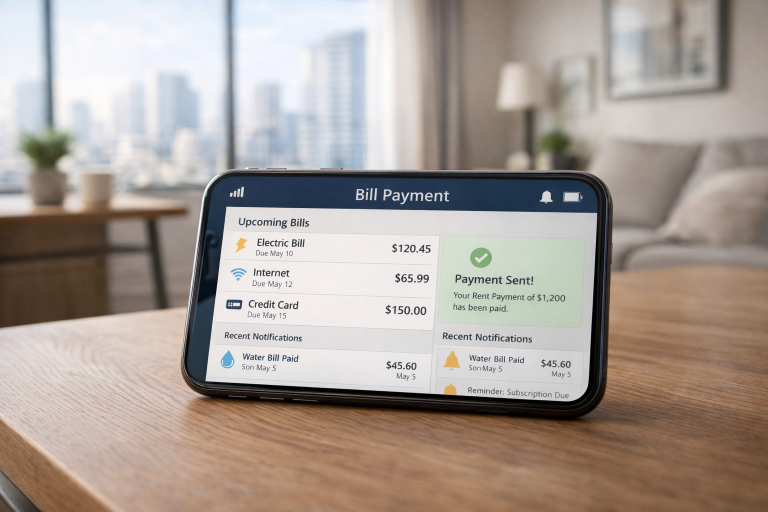
If your main struggle is forgetting bills, look for apps focused on bill automation. If you overspend without realizing it, a budgeting-focused app makes more sense. Choosing an app without clarity usually leads to frustration and abandonment after a few weeks.
Understand the Features That Actually Matter
Many apps advertise advanced features, but beginners should focus on a few essentials.
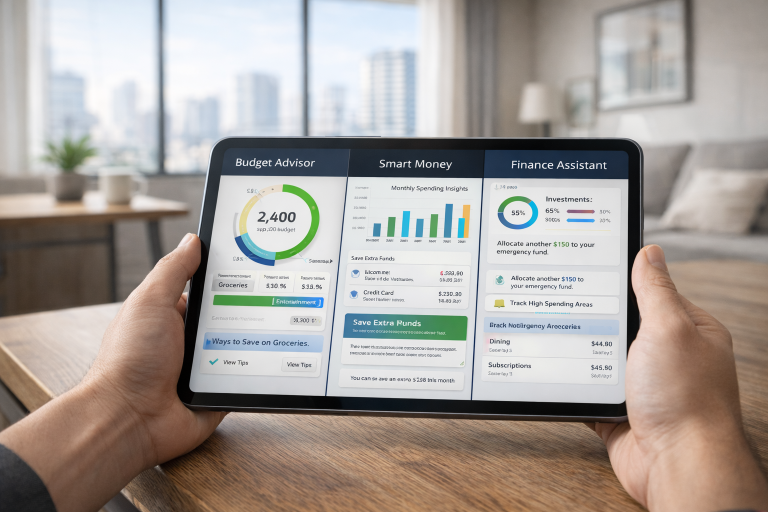
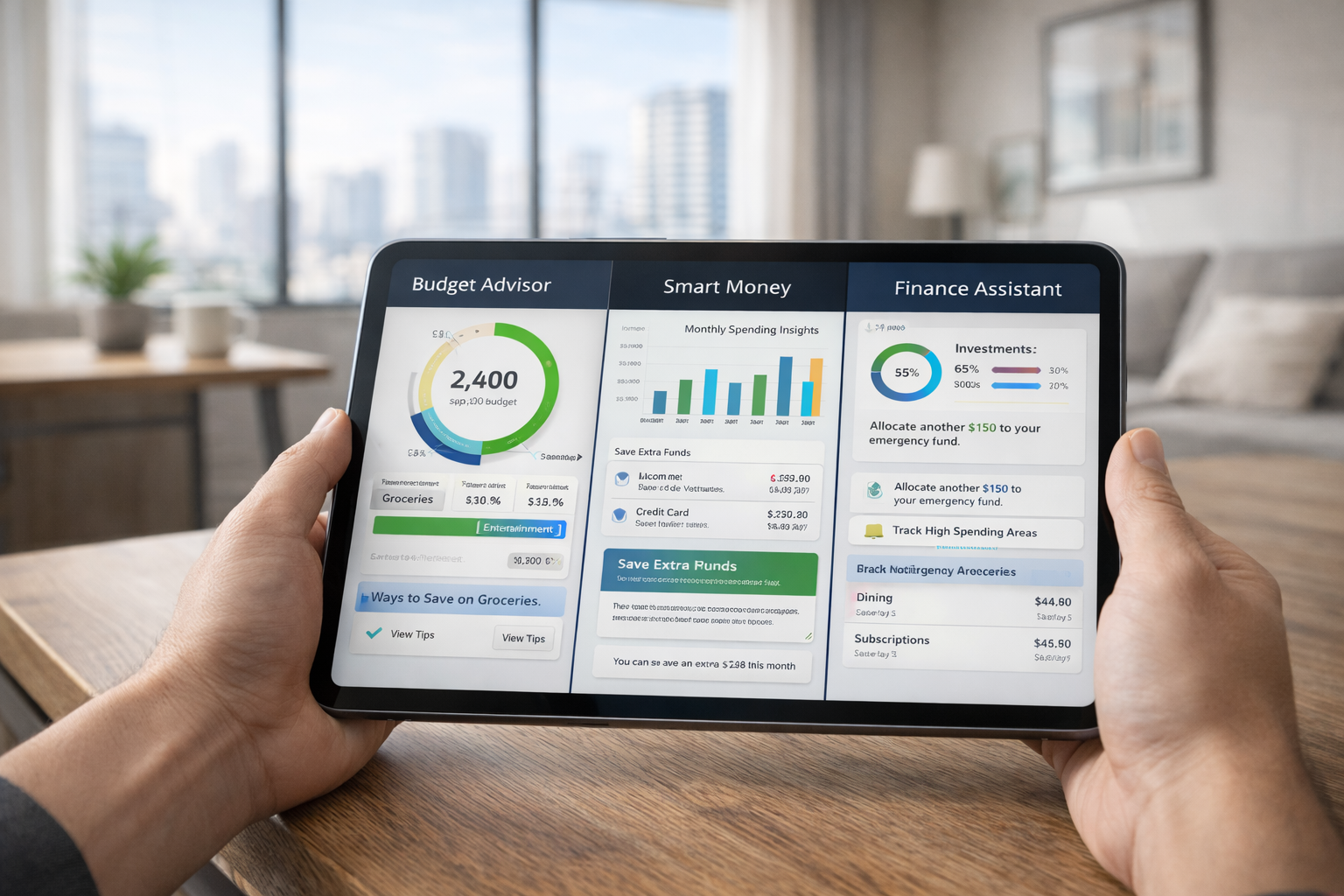
Look for clear dashboards that show your money in plain language. If you open the app and feel confused, that’s a red flag. The app should make your finances feel simpler, not more complicated.
Automatic tracking is another key feature. The best apps connect securely to your accounts and categorize transactions without manual input. This saves time and reduces errors.
Notifications also matter. Alerts for low balances, upcoming bills, or unusual spending help you stay in control without constantly checking the app.
Think About Your Daily Urban Reality
Urban living comes with unique financial patterns. Rent often takes a big chunk of income. Transportation, food delivery, subscriptions, and utilities add up quickly.
A good AI financial app should reflect this reality. It should help you plan around fixed expenses like rent while giving flexibility for variable costs like transport or groceries.
Seasonal changes matter too. Utility bills may rise in summer or winter. Holidays bring extra spending. The right app helps you anticipate these changes, not just react after the money is gone.
Don’t Ignore Security and Privacy
This part is non-negotiable.
Only use apps that offer bank-level encryption and clearly explain how your data is used. Read their privacy policy — not every word, but enough to understand whether your information is sold or shared.
A good app gives you control. You should be able to disconnect accounts, pause automation, or delete your data if you choose. If an app feels secretive, skip it.
Start Small Before Going All In
One of the biggest beginner mistakes is trying to automate everything at once. That often leads to confusion or mistakes.
A smarter approach is to start with one function. For example, begin by tracking spending only. Once you’re comfortable, add bill automation or savings features. This gradual setup builds confidence and helps you understand how the app works in real life.
Most people who succeed with financial apps do so because they grow into them, not because they set everything up perfectly on day one.
Watch Out for Common Beginner Pitfalls
Many beginners choose apps based on hype or aesthetics alone. A beautiful interface doesn’t mean the app fits your lifestyle.
Another mistake is ignoring fees. Some apps are free, others charge monthly subscriptions. Make sure the value matches the cost. Paying for an app that saves you time and prevents late fees often makes sense — but only if you actually use it.
Also, avoid apps that push too many features you don’t need. Simplicity usually leads to consistency.
Conclusion
Choosing the right AI financial app isn’t about finding the most advanced technology. It’s about finding a tool that fits your life, reduces stress, and helps you make better decisions without effort.
Start with your needs, focus on simplicity, prioritize security, and grow into automation at your own pace. The right app won’t just manage your money — it will help you feel more confident about it.
FAQ
Do I need multiple AI financial apps?
Most beginners are better off starting with one app that handles their main need. You can add others later if necessary.
Are paid apps worth it?
They can be, especially if they save time or prevent fees. Always compare features before subscribing.
Can I use these apps with irregular income?
Yes. Many apps allow flexible budgeting and alerts instead of rigid rules.
How long does setup usually take?
Basic setup often takes 15–30 minutes. Advanced features can be added gradually.
Will the app make financial decisions for me?
No. Good apps assist and guide, but you remain in control.
Helpful Resources
- Federal Deposit Insurance Corporation (FDIC) – Managing Your Money
https://www.fdic.gov/consumer-resource-center/money-smart
Trusted financial education resources covering budgeting, digital banking, and responsible money management. - U.S. Federal Reserve – Consumer Banking and Payments
https://www.federalreserve.gov/consumerscommunities.htm
Authoritative insights into modern banking systems, payment technologies, and consumer financial protections. - OECD – Digital Financial Literacy
https://www.oecd.org/financial/education/
International research and frameworks on digital and AI-driven financial literacy for consumers worldwide.
About The Author