
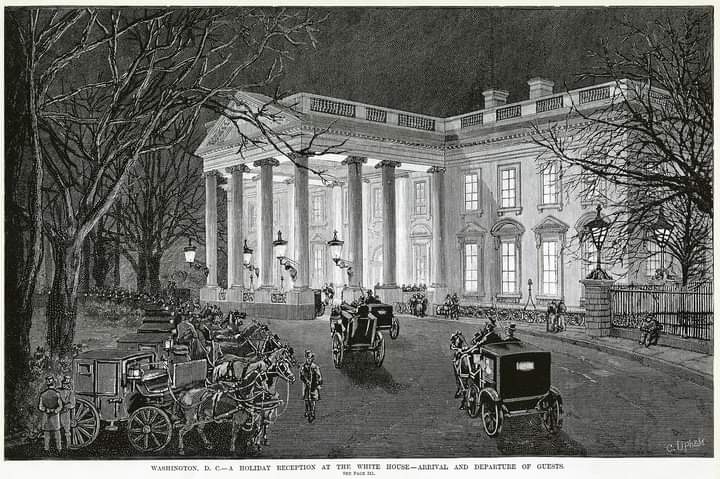
Gas lighting was first installed in the White House in 1848. While this new technology was much safer than burning various oils or wax candles, it was not nearly as reliable. After the Capitol Building received gas lighting, Commissioner of Public Buildings Charles Douglas arranged for the Executive Mansion to be equipped with it as well. In 1847, the Baltimore Gas Company began building a gas plant on the Capitol grounds. This pipeline was extended west to the White House beneath Pennsylvania Avenue. Gas street lamps placed along the avenue also were connected to the line, illuminating Washington’s most famous street.
The pipe continued under the White House Grounds, entering the building on the south side. Inside the house, gas “brackets” were mounted to the walls near shoulder height. Cornelius & Company of Philadelphia outfitted many of the chandeliers on the State Floor so they could harness the new technology.
First Lady Sarah Polk, however, preferred wax candles to gas lighting. She even stopped the workmen from converting her favorite chandelier in the Blue Room. Installed during James Monroe’s presidency, the gilded bronze chandelier held approximately thirty candles and provided illumination for one of the White House’s most important social spaces.
Although some initially criticized this decision, the first lady was vindicated at the first reception after the work had been completed. When the gas company turned off the gas at 9 p.m. the Blue Room chandelier’s candles continued to burn bright while the other State Floor rooms were shrouded in darkness. Today’s image shows the 1886 White House illuminated by gas lanterns.
Sarah Polk was an intellectual and influential first lady, and this month we will share some lesser-known insights about her — who she was, and how she used her influence during her time as first lady. Stay tuned as each month we examine a different first lady and their profound impact on the Executive Mansion and beyond.
Image: Charles Upham, Library of Congress
About The Author


