
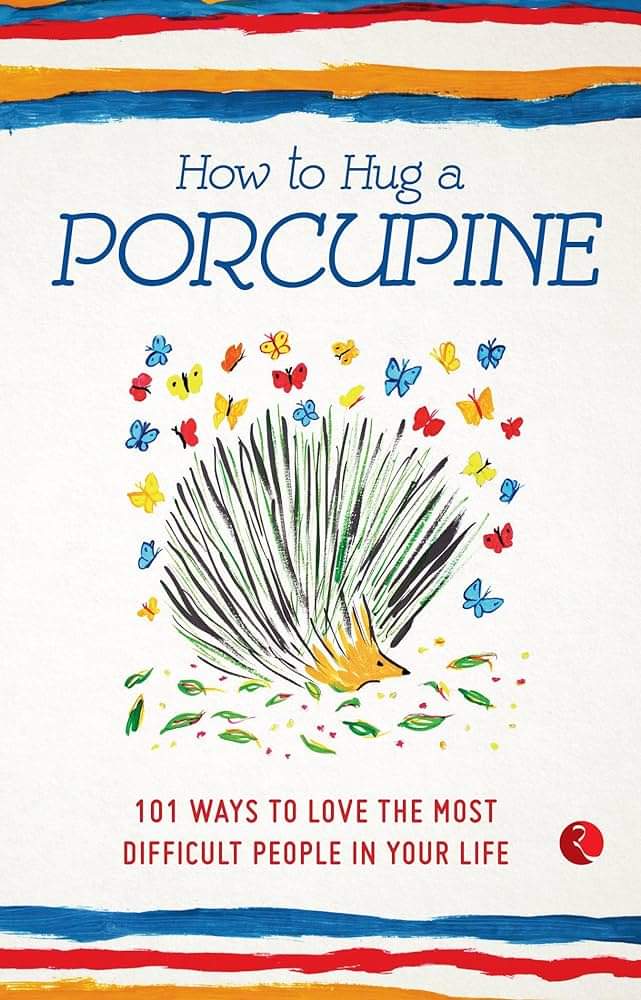
10 Key Lessons from “How to Hug a Porcupine: 101 Ways to Love the Most Difficult People in Your Life” by Debbie Joffe Ellis:
1. Difficult people often have their reasons: Their behavior might stem from pain, fear, insecurity, or trauma. Understanding their underlying motivations can foster compassion and guide your approach.
2. Focus on changing your response, not them: You can’t control others, but you can control your own reactions. Choose empathy and healthy boundaries instead of anger or frustration.
3. Set clear boundaries to protect yourself: Define what you will and won’t tolerate and communicate these boundaries assertively but kindly. This protects your well-being while still allowing space for understanding.
4. Practice effective communication: Use “I” statements to express your feelings and needs without blaming or attacking. Actively listen to understand their perspective, even if you disagree.
5. Offer kindness and compassion, even when it’s tough: Genuine kindness can disarm negativity and encourage positive change. Remember, they are still human and worthy of respect.
6. Don’t take their behavior personally: Difficult behavior isn’t always about you. Recognize that their actions reflect their own struggles, not your value.
7. Choose your battles wisely: Not every interaction needs to be addressed. Pick your moments carefully and focus on situations where healthy resolution is truly possible.
8. Seek support for yourself: Dealing with difficult people can be draining. Build a support network of friends, family, or therapists to help you process your emotions and maintain your well-being.
9. Remember, you can’t change everyone: Sometimes, despite your best efforts, a relationship with a difficult person may not improve. Accept this and focus on nurturing healthy relationships instead.
10. Celebrate your own resilience: Navigating challenging relationships requires strength and compassion. Acknowledge your efforts and progress, and treat yourself with kindness.
Remember, these are just key takeaways. The book itself offers a wealth of practical strategies and real-life examples to guide you in navigating difficult relationships with love and understanding.
About The Author


