
The Lisbon Regicide
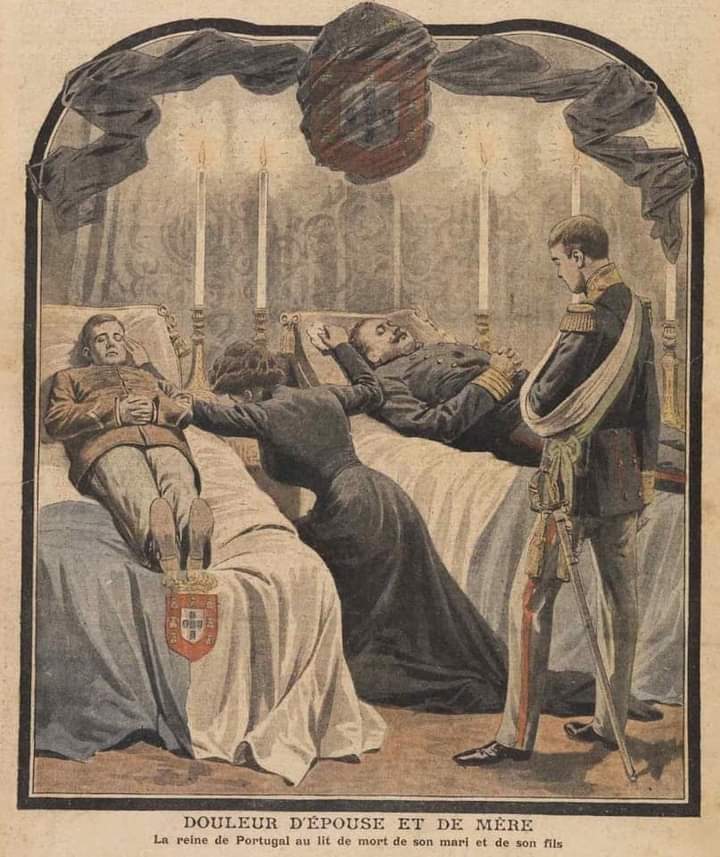
On February 1, 1908, King Carlos I of Portugal and his 20-year-old heir, Infante Luís Filipe, the Prince Royal, were assassinated in a shocking act that shook the foundations of the Portuguese monarchy and ultimately lead to its downfall.
The events leading up to the assassination were rooted in political discontent and widespread dissatisfaction with the monarchy. Portugal was grappling with economic challenges, social unrest, and political instability. The monarchy, perceived as corrupt and out of touch with the needs of the people, became a target for those seeking change.
The actual assassination took place during a visit to Lisbon by the royal family. As the King, Queen, Prince Royal and Duke of Beja rode through the streets in an open carriage, they were ambushed by two assailants, Alfredo Luís da Costa and Manuel Buíça. Gunshots rang out, fatally striking the king and his heir, and wounding his younger son. The attack sent shockwaves across Portugal and beyond, as the news of the regicide spread.
King Carlos’s second son, the Duke of Beja, 18 years old, ascended the throne as King Manuel II, being officially proclaimed a few days later.
The motives behind the regicide were complex and multifaceted. Some saw it as a radical act against an oppressive monarchy, while others viewed it as a desperate attempt to instigate political change. The assassins themselves were part of a broader revolutionary movement known as the “Carbonária,” which sought to bring about a republic in Portugal.
In the aftermath of the regicide, the monarchy faced intensified criticism, and the public demand for change grew louder. The political landscape shifted rapidly, with King Manuel being deposed and leading to the establishment of the First Portuguese Republic on October 5, 1910. This marked the end of the monarchy that had endured for centuries.
King Manuel went into exile, settling in the London suburb of Twickenham, marrying Princess Augusta Victoria of Hohenzollern, a cousin of King Ferdinand of Romania. They did not have children together. Manuel died in 1932 at the age of 42. He was given the nickname “O Desventurado” (“King Manuel the Unfortunate”).
About The Author


