
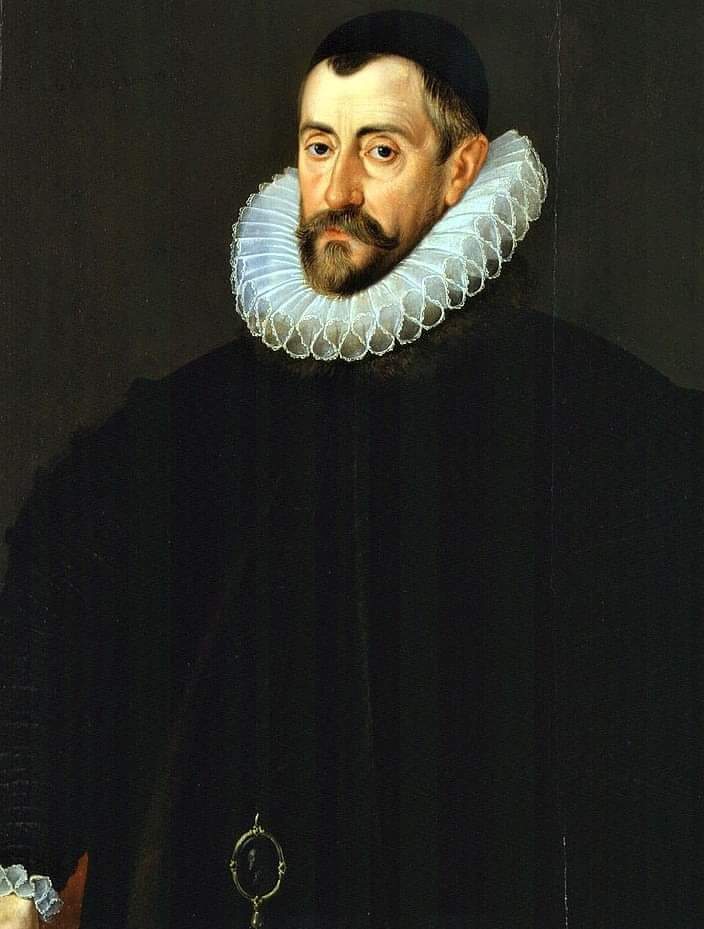
Death of Francis Walsingham ~ Queen Elizabeth I’s Spymaster
Francis Walsingham was a crucial figure in Elizabethan times.
His tasks included running the Secret Service, and serving as Secretary of State during times of international conflict ~ including the Spanish Armada.
He also played a pivotal role in the downfall of Mary Queen of Scots, showing his loyalty to his queen, Elizabeth I.
Francis Walsingham was born around 1532 near Chislehurst in Kent.
As a young man he would complete his education at King’s College, Cambridge.
He then spent some years studying in France and Italy, before returning to England to begin his career as a lawyer.
As a result of his commitment to his Protestant faith, he was exiled to Switzerland during the reign of Queen Mary I, herself being a devout Catholic.
It was not until the death of Mary I, and the succession of the Protestant Elizabeth as queen, that he could return home.
When Walsingham returned to England, he secured his first role in politics.
First as a member of parliament for Bossiney, Cornwall and then as a MP for Lyme Regis in Dorset.
In the same year he married Anne, a widow and daughter of the Lord Mayor of London, Sir George Barne.
Unfortunately after just two years of marriage she died, leaving Walsingham a widower.
Francis would go on to remarry Ursula St Barbe, and they had a daughter together, Frances.
In his political career, Walsingham found himself actively engaged in matters he felt strongly about, including support for the plight of the Protestant Huguenots in France.
It was during these early political years that he attracted the attention of William Cecil, Lord Burghley.
In 1568 Walsingham became Secretary of State, and began overseeing intelligence gathering operations, designed to foil plots to overthrow the queen.
He soon amassed a large network of spies.
As the attempts on her life intensified, Francis Walsingham rose to the occasion as spymaster general.
In 1570 Walsingham was appointed ambassador to France, which would have a great impact on his personal faith and conviction.
Walsingham bore witness to the events on Bartholomew’s Day.
This was a massacre of Protestants, which would deeply affect him and colour his subsequent dealings with the Catholics.
Upon his return to England, Walsingham was appointed to the Privy Council, and assumed the role of principal secretary.
This was a role full of responsibility, involving both domestic and foreign affairs.
This new role saw him have further contact with Elizabeth I, who initially held him in disdain on a personal level.
Despite the initial rocky relationship with the queen, his trustworthiness and loyalty to the crown allowed him to develop a vast network of spies and informants.
This enabled him to infiltrate Catholic conspiracy circles.
Walsingham and his spy network, would continue to play an important role for Elizabeth.
From 1571 onwards, Walsingham complained of ill health, and often retired to his country estate for periods of recuperation.
He complained of pains in his head, stomach and back, and difficulty in passing urine.
Suggested diagnoses include cancer, Kidney Stones, Diabetes, Urinary Infection or Testicular Cancer.
Francis Walsingham died on 6th April 1590.
He was buried privately in a simple ceremony at 10 pm on the following day, in Old St Paul’s Cathedral.
Unfortunately, his grave and monument were destroyed in the Great Fire of London, in 1666.
However, his name appears on a modern monument in the crypt, listing the important graves lost during the fire.
? Portrait of Francis Walsingham c.1585.
Attributed to John de Critz
About The Author


